
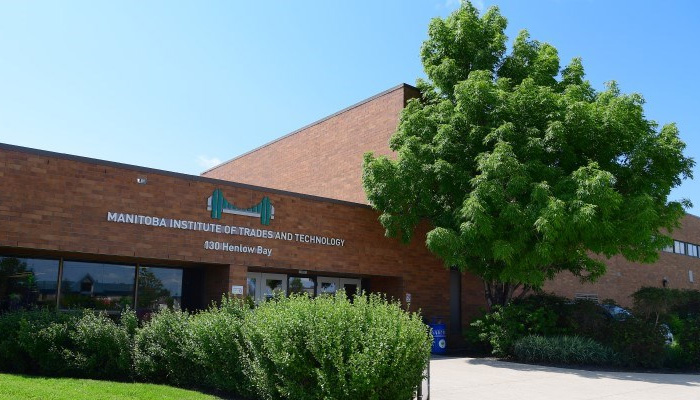
On January 28, the Manitoba Institute of Trades and Technology (MITT), a public technical college in Winnipeg with an additional campus in Morden, announced that it would be “winding down” operations at the end of the current school year. The institution blames the federal government’s restriction on international students. Citing a 55 percent decrease in international student enrolment, MITT stated it was unable to continue operations. Students currently enrolled will finish this year of studies.
As of writing, it is unclear exactly what the fate of the college’s workforce is. MITT employs professionals to train and coordinate apprenticeships within the province. The closure of the institution very well could represent a mass layoff of employees, although details remain sparse.
What is clear, however, is that MITT, despite its claims of prioritizing students, serves as an example of the end result of austerity measures in our public education system. Like other institutions, whether they be small polytechnic colleges or major research universities, MITT has maintained its operations not as a public service, but on the exploitation of international students as a form of easy revenue.
MITT: from a regional service to tuition-based (public) business
Unlike Manitoba’s other public colleges such as Red River Polytechnic (RRC) or Assiniboine College, MITT operates at a considerably smaller scale. MITT was born out of the Winnipeg Technical College, a training centre for secondary schools in Winnipeg’s south end. The institution offered vocational programming and diplomas to students in the present-day Pembina Trails School Division. These origins reflect Winnipeg’s broader educational ecology; with individual school divisions providing their own alternative and vocational programming depending on the needs of their students. School divisions in Winnipeg remain funded on a model based on the property taxes within their borders. The south end of the city which the Winnipeg Technical College served has historically been one of Winnipeg’s wealthiest regions in terms of property tax revenue; concentrating resources within a smaller per capita school division. These early origins explain some of the college’s ability to quickly expand; funded by a wealthier tax base compared to other vocational schools such as the Winnipeg School Division’s Tec Voc High School or Argyle Alternative School, the Winnipeg Technical College was afforded access to a larger share of school division support.
Once incorporated as a public college independent of its school division, the college was renamed to MITT and quickly opened a campus in Morden as well as additional training centres across the city of Winnipeg. MITT maintained its 1–2 year diploma programming in trades such as welding, childcare, and information technology. Additionally, MITT partners with the United Food and Commercial Workers (UFCW) in Manitoba to provide training and adult education programming. For many in Winnipeg, whether they be recent immigrants or long-time union workers, MITT remained one of the most prominent institutions for adults to receive their Grade 12 education. It’s through these connections with UFCW that many workers were provided easier access to this opportunity.
For the adult training centres, the fees for tuition are paid for in part by the unions, school divisions, or by the mature students themselves. The tuition model persists, but is subsidized through workers’ wages or the already limited resources of school divisions, if not made entirely out of pocket by the students.
Although the Province of Manitoba is a significant source of revenue for the college, tuition remains the backbone of the institution’s funding model. It appears that MITT pivoted towards recruitment campaigns to international students in the early 2010s. In the 2024–2025 academic year, international students accounted for just over 40 percent of the college’s student population with 1,988 international students out of a total college enrolment of 4,663. Although numbers are not clearly available for MITT’s adult training centres, the college remains the site of direct recruitment of international students.
Tuition fees vary from program to program, with the cheapest program starting at $5,400.00 and the most expensive being $11,552.00 in the 2025–2026 academic year.
The future of MITT and the stresses of Manitoba’s colleges
The future of MITT’s students and staff remains uncertain. Following the announcement by the college of its eventual closure, RRC released a statement that it would take over some of the programs. Given trends across the country, it stands that RRC will also likely see a decrease in international students funding the college’s operations. Presently, RRC is suffering financially. Many students are subjected to years-long waiting lists to enter high-demand trades programs. Meanwhile, other programs have either been cut, transitioned to distance learning taught by term-to-term contract instructors, or offered every few years on rotation. Given these circumstances, it is doubtful RRC will be able to adequately absorb the entirety of MITT’s programs while maintaining its current funding model. So long as the college remains dependent on tuition as a means of funding, especially relying on the international student tuition scheme, the college will follow the logic of privatization of education instead of recognizing education as a right to all.
It behooves the government of Manitoba to intervene and increase financial support to colleges in the interim, reducing tuition fees. Instead, the Minister of Advanced Education and Training Renée Cable blamed the federal government’s restriction on international students for MITT closing. Rather than prioritize the preservation of public educational institutions, the province of Manitoba continues to support the scam of exploiting international students to line the pockets of post-secondary institutions. Given how rapidly MITT’s funding model imploded, without a transition to alleviating tuition-based funding, the same fate could strike RRC and its roughly 20,000 students. As we see more and more institutions shutter whole departments to respond to free-market forces, like the infamous case at Laurentian University a few years ago, the right of students to choose a quality and free education, as a right, is being attacked by the pursuit of profits.
In the absence of public colleges, students are left to the whims of “degree-mill” institutions. These for-profit colleges such as Robertson College and Herzing College in Winnipeg offer many of the same programs that MITT did, for almost double the price. With lower waitlists and predatory recruitment campaigns targeting international students that often leave them stuck to the institution, “degree mills” have continued to see steady enrolment. With a void left by MITT and RRC unable to take on its full scope of operation, there is a considerable risk of international students desperate to keep their status as students, lest they be deported, turning to colleges that promise everything and provide nothing but debt.
The solution is free tuition
Given this shift in Manitoba’s post-secondary ecology, the solution is clear. The provincial government needs to act to properly fund institutions. Universities and colleges need to abolish tuition, cut their ties to investors and stockholders, and shift to providing a free, equitable public education to everyone who seeks one. The socialization of all public services, including post-secondary institutions, is necessary to empower the working people. Relying on international students to fund vital centres of training and education is undemocratic and subjugates a significant portion of the population who, as a matter of happenstance, were born outside of our borders. Welders, carpenters, child-care workers, engineers; these are vital roles in our society and anyone ought to have the right to the proper training to play the role that they desire and is needed. Education is a right, barring it behind tuition concentrates technological and academic know-how to a select strata of society. As the program of the YCL-LJC stresses, in the 21st century the pressures of austerity endanger democratic access to education.
As communists, students, and workers, we demand that our educational institutions distance themselves from the dictates of the capitalist economy and be transformed into public utilities. What we in Manitoba have seen from MITT is the only result of following the logic of capitalism: massive cuts, layoffs, and eventual closures which exacerbate the pressures of austerity on other institutions as students seek their education elsewhere. For post-secondary education, the future is to socialize or die.