
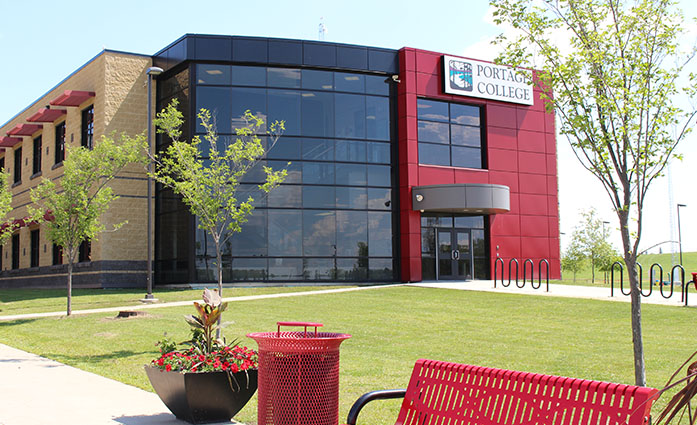
On June 24th, Immigration, Refugees and Citizenship Canada (IRCC) changed the rules regarding application for the Post-Graduate Work Permit (PGWP). The change, which IRCC claims is a mere “clarification,” affects students in non-credit programs. Students enrolled in these programs no longer qualify for work permits. The change was implemented with little announcement. Many recent graduates of Portage College, an Albertan post-secondary institution with around 2,000 students across both its campuses, report that while some in their programs have been accepted, others have been arbitrarily refused and given 90 days to leave the country.
Students at the Edmonton campus organized an International Students Alliance (ISA) to fight for those who applied for the PWGP before June 24th to be assessed under the rules as they were then. The ISA represents around 500 students at the Edmonton campus. The alliance ran a sustained protest campaign with daily mobilization. The momentum was sustained by a well organised shift system to keep the signs up along the streets at all times, and by the generous donations of food from the community, particularly a local Sikh temple. A similar protest was organized in Calgary.
Both efforts suffered a downturn after the police began calling Canada Border Services Agency (CBSA) officers in to threaten the protester with exclusion orders on August 12th and have since entirely ceased.
Before the exclusion order the response from many Canadians in Alberta was often rather racist and chauvinistic. Many accused the students of “stealing” jobs or trying to “trick” their way into permanent residency. Much of their racist rhetoric told students to “go home,” or outright called for their deportations. But when the Calgary police actually threatened these students with exclusion orders, the forces of reaction were drowned out by waves of support.
Over 250 national organisations have signed Migrant Rights Network’s open letter and petition demanding protections for migrants’ right to protest, an independent investigation into Calgary police and CBSA’s actions, a suspension of the exclusion orders, and for the students’ work permits to be assessed under the rules that applied when they enrolled. The support for students clearly outnumbers the unorganized opposition led by racist and xenophobic narratives. Albertans overwhelmingly support the migrant students’ rights to stay in Canada to study and work.
What do the students want? Students who spoke with Rebel Youth stressed that most of them hope to continue to fight for the education and work they travelled thousands of kilometres and paid tens of thousands of dollars for in good faith. Some, however, have been demoralized by extortionate judicial review fees – which amount to $8,000 per student – and the promise of more if they fight. As one student told the Calgary Herald, “everyone was bamboozled.” Students followed “the law, and the government came and changed the rule and just cancelled everything,” and he “will most likely go home to India, as not being able to work leaves [him] with few options.”
Why do people pay so much and travel so far to study and work here?
Students come to Canada as a result of the positions of their home countries in the imperialist pyramid, squeezed by the economic exploitation of global capital propped up by the NATO bloc. As capital continues to parcel out the world, and growing militarization efforts lead to a race of privatization and extraction, the gap in access to education continues to grow. This domination is the reason many of the students cannot find the same study or work opportunities at home as they can in Canada. In those countries near the bottom rung, wages are lower, working conditions are less safe, and educational opportunities are scarcer.
When Canadians attack international students and migrant workers for coming to Canada, we must retort that because the imperialist boot is on their throat, some seek opportunities in Canada as. If not for the economic conditions created by imperialist plunder, students and workers would not feel compelled to uproot themselves and leave home to seek education and work in conditions where wages are higher. Imperialism creates the conditions that drive them from home, and invites them here to extort fees out of them as students and exploit them as workers through low wages and dependency on Canada’s work and study permit system.
Anti-immigrant racism fractures the solidarity of the working class which is why it is so constantly inflamed by right wing media and politicians. As Marx put it, racism “is artificially kept alive and intensified by the press, the pulpit, the comic papers, in short, by all the means at the disposal of the ruling classes. This antagonism is the secret of the impotence of the working class, despite its organisation. It is the secret by which the capitalist class maintains its power. And the latter is quite aware of this.”
Furthermore harsh and arbitrary border controls place migrant workers in a more precarious position. If a worker is worried about being kicked out of the country by losing their job, they are less likely to make a fuss when their boss underpays, overworks, and outright abuses them. Ironically by worsening the conditions for migrant labourers, the racists’ support for exclusionary policies only makes capital want to bring in more of the cheapened labour, which ultimately “forces down wages and lowers the material” conditions of the working class.
The protests, police response, and public support demonstrates important elements of international student mobilizing. For international students, their precarious legal position and experiences back at home can often turn them into staunch allies of anti capitalist and anti imperialist movements. Working with migrant students and workers is a way to build firm links of international solidarity. However, on the ground, their precarious legal status makes their movements more vulnerable to suppression, further highlighting the need for strong, broad solidarity.
The Portage College students were advertised post-secondary education in Canada predicated on fairness, transparency, and equality; the Canadian government and post-secondary institutions lied. The YCL-LJC fights for a public monopoly on education that provides free education for all to make this promise true. The extortion of international students, the annual tuition hikes, and the post-secondary program and job cuts can only be stopped by an anti-monopoly alliance of working people and their allies in the student movement fighting for a public, democratic monopoly on all social services including education.
You may also like
-
Militarism in our schools: The case against increasing militarization through student initiatives on campus
-
Northern Alberta Institute of Technology Faces Cuts as Profits Fall
-
Against OSAP cuts, mass mobilization is the answer
-
Solidarity with Ontario students organizing against cuts to OSAP and cuts to public education!
-
Manitoba Institute of Trades and Technology shutters