
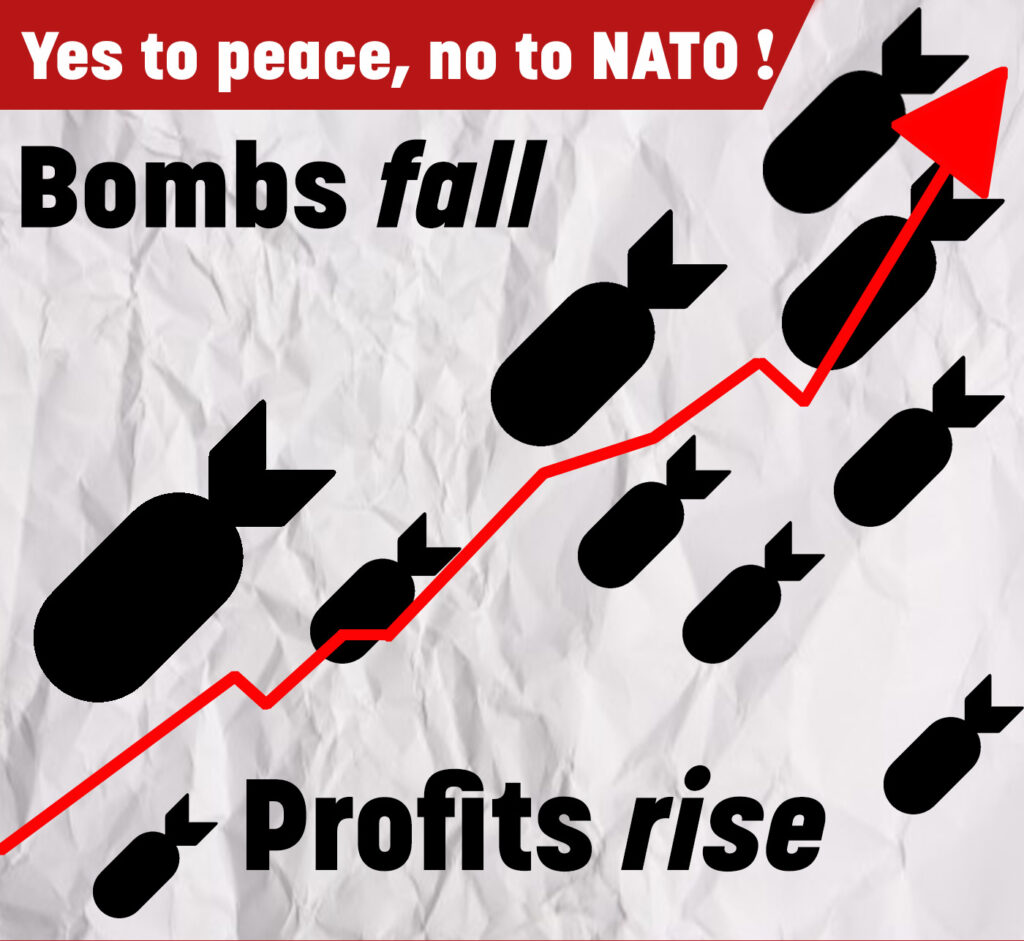
Imperialist aggression has taken on a more violent, bald-faced nature as the calendar has turned to 2026. The year began with the bombing of Caracas and an overnight abduction of Venezuelan President Nicolas Maduro and his wife Cilia Flores, a flagrant violation of Venezuelan sovereignty and the culmination of years of pressure on the administration by both Trump and Biden. This has been connected to more aggressive and decisive international interventions by the US generally, in the year and a half since Trump has resumed control of the White House. Talk of annexing Greenland, escalating the blockade on Cuba, and intervening militarily in Iran reflect the violent lashing out characteristic of inter-imperialist conflict and crises. Many of these decisions reflect the urge to bring more of the world’s natural resources under the control of the leading imperialist powers.
The escalation of the blockade on Cuba deserves special attention. The imposition of a fuel blockade on January 29 was the start of this new stage of aggression by the United States, but new sanctions are being added constantly. Recently, additional sanctions being placed on state-owned logistics and transport companies makes the import of crucial supplies even more difficult, tightening the screws on an already very difficult situation. Cuba has stood for close to 70 years as an icon of anti-imperialist resistance, 90 miles off the coast of the most powerful imperialist hegemon in world history. Since the coronavirus lockdowns, Cuba’s tourist-oriented economy has struggled, as the flow of tourists coming into the country has failed to reach pre-covid heights six years later. The kidnapping of the head of state of one of the island’s most important allies, followed by the fuel blockade, has exposed the ever more aggressive means that the US will take in order to quash any example of a successful socialist society in its hemisphere.
The Canadian government, led by international banker Mark Carney, has done as little as possible in response to this crisis. Despite the history of Canada’s foreign policy on Cuba as a rare instance of breaking from US foreign policy, there is almost no appetite for supplying fuel and aid (in meaningful quantities) to a country that is a much smaller mouse sitting next to the much more violent side of the US elephant. We may be forgiven for asking why it seems we have our “elbows up” while we remain on our knees.
Even the speech made by Carney at the World Economic Forum in Davos, extolling the need to reorient Canada among the “middle powers” overstates this potential realignment. A more apt description would be to call this a reshuffling of intra-imperialist alliances, with the goal of providing additional markets for Canadian capital to penetrate. Despite the references he made in his speech about the dangers of “intensifying great power rivalry” Carney refused to condemn the US for their actions in the US-Israel war on Iran and Lebanon. Even as some form of peace process takes place, Carney has described the war as being “worth it”, which presumably includes the thousands of civilians and hundreds of schoolchildren killed in US bombings. This is no coincidence; Canada’s role as a supplier of crude oil allows the US to interfere in crucial global supply chains that it would otherwise avoid, with 90% of its exported crude going to the US. The living embodiment of international finance capital, we should not be surprised that Mr. Carney knows how to speak out of both sides of his mouth as it suits him.
It is clear that the US-Israeli war on Iran is, among other things, a weapon being used to attack China’s access to vital resources. Iran was sending approximately 90% of its crude oil exports to China in 2024 and roughly 45% of crude oil and 30% natural gas imports to China passed through the Strait of Hormuz. We know that since the start of the war the Iranian revolutionary guard have charged tolls in yuan for ships passing through the strait.
The Canadian-US energy integration is not a geographical accident. It is the result of a deliberate political choice, pursued for decades, which has allowed Canadian pipelines to run exclusively along a north-south axis and neglected east-west corridors. This dependence has made the Canadian state and monopolies an accomplice of American imperialism’s war on the region. Every barrel shipped south frees the United States from the constraint of importing from the Gulf and gives them the freedom to wage wars without fearing for their physical supplies.
These wars attempt to foster support along narrow nationalist lines, pitting the working class of one country or one nation against others. As proletarian internationalists, we know that our liberation is not tied up in the victory of this or that bourgeois state over another, and that war runs counter to our class interests. We fight for peace, and for bridging national divides. In Cyprus, that is why we support the UN-recommended Bizonal, Bicommunal Federation as a fix to the Cyprus Problem, ensuring political equality for both national communities on the island. While always a fraught situation, it appears that there is political will to resolve the problem, and we hope that negotiations are able to resume soon.
As members of the YCL-LJC, we have our work cut out for us; as the saying goes, we live in “the belly of the beast”, this affords us unique opportunities for organizing an anti-imperialist, anti-monopoly resistance. Our “Canada Out of NATO” campaign is just one example of this, an attempt to undermine the dominant imperialist alliance in our hemisphere. The dark cloud of a third world war looms heavier on our horizon; as theyouth it is our duty to fight for peace and solidarity, to ensure that we will, in fact, have a world to fight for.
Against war and imperialism! For proletarian internationalism!
You may also like
-
Le système de santé cubain à l’épreuve du Blocus: Entretien avec le Docteur Alex Carreras Pons
-
Interview with a member of the Revolutionary Communist Youth League (bolsheviks)
-
Solidarity with the Students in France! / Solidarité avec les étudiants en France !
-
Free Trade and Sovereignty: Canada Must Defend its Sovereignty Through Economic Autonomy!
-
Defending Cuba is defending our future: The No War on Cuba Campaign in Canada